.jpg)
While many countries have five-day school weeks, France maintains the tradition of a four-day week in primary education. Although this mid-week break is designed to suit a child's rhythm, it often presents a significant logistical challenge for working parents. How can this "day off" be transformed into productive time, without resorting to excessive screen time?
But why do some French children not go to school on Wednesdays? This practice has its roots in historical, social, and pedagogical considerations.
The Wednesday Club at École M offers a full day of bilingual immersion (100% in English, including sports, art, and music) for children aged 3 to 10, open to everyone.
👉 Discover the Wednesday Club program
The practice of not sending children to school on Wednesdays dates back to the late 19th century. At that time, French students attended school six days a week. However, over time, the need to reduce students' workload and adjust the school week structure emerged. In 1882, the Ferry Law introduced compulsory schooling and established the principle of secular, free, and mandatory education for all children. The six-day school week was then reduced to five days, with Wednesdays set aside for extracurricular activities and rest.
The choice not to have school on Wednesdays offers students the opportunity to participate in extracurricular, sports, and cultural activities. This promotes children's overall development by allowing them to engage in hobbies, sports, arts, and other activities that can contribute to their personal growth. Many families opt for an alternative childcare solution for Wednesdays and use this time to introduce their children to new activities. For example, a new language.
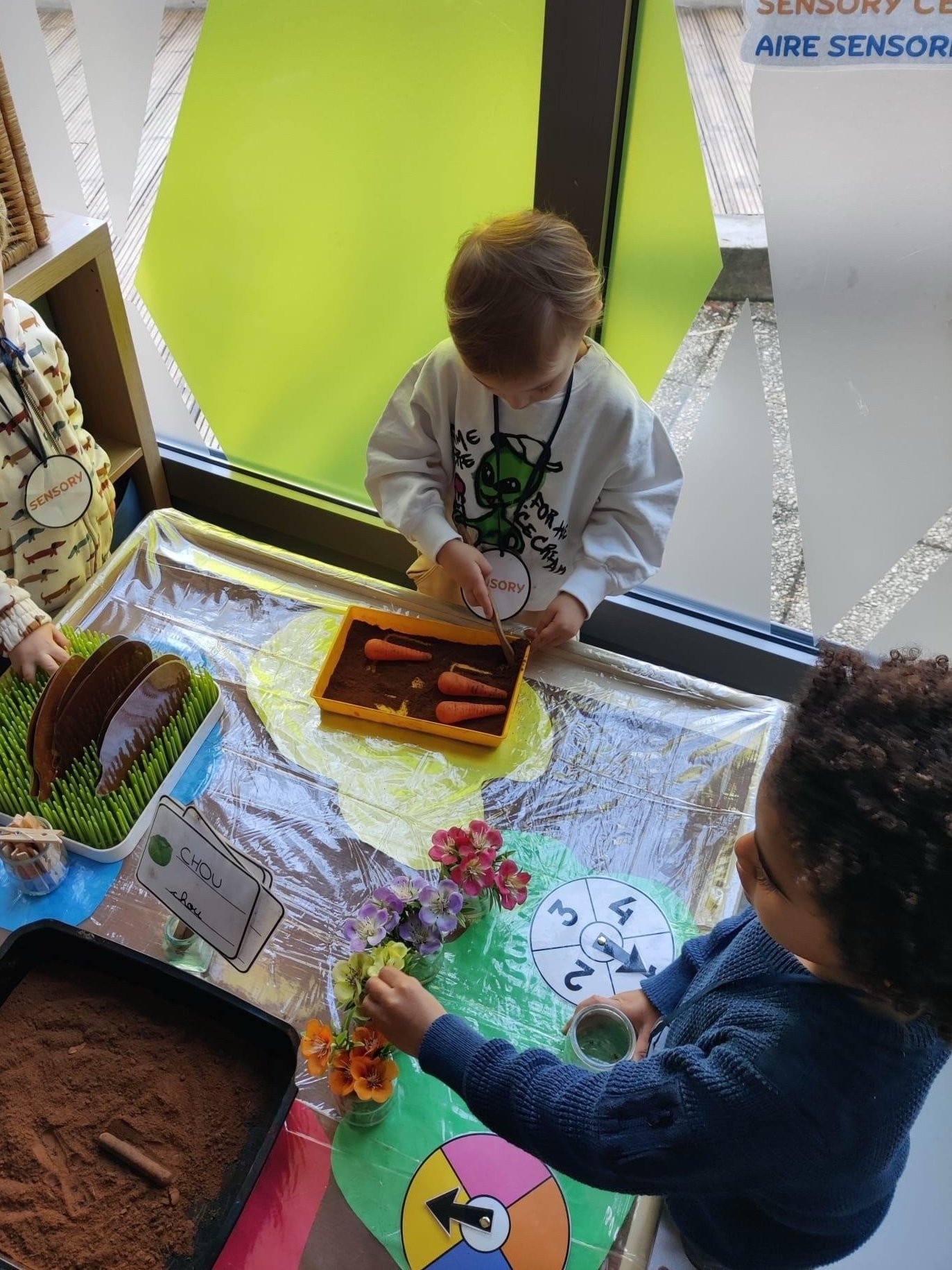
In Paris and its nearby suburbs, more and more families are looking for an English activity on Wednesdays for their children. The goal: to offer genuine exposure to the language, without adding academic pressure.
A 100% English Wednesday is a full day where children practice the language through sports, artistic, and creative activities, guided by English-speaking instructors. English becomes a natural communication tool, used for playing, creating, cooperating, and expressing themselves.
This immersive approach is particularly well-suited for preschool and primary school children in Paris, as it allows them to:
It is in this spirit that école M offers the Wednesday Club (a 100% English Wednesday program) in its locations in Paris 5th, Paris 14th, Paris 11th, Paris 15th, Paris 19th, Paris 20th, and Clichy, providing bilingual immersion Wednesdays, open to all children, including those enrolled in other schools.
However, it is essential to note that changes have occurred in recent years. Some establishments have experimented with four-day weeks to meet educational needs and parental expectations. These changes have sparked debates and discussions about the best organization of the school week, with arguments in favor of adapting to contemporary realities and concerns regarding the quality of education.
Although the tradition of no school on Wednesdays in France dates back over a century, questions continue to emerge regarding the relevance of this school week organization. Proponents of the four-day week emphasize the need to adapt to current educational needs, while others believe that the tradition of a free Wednesday promotes children's well-being and offers opportunities for their overall development. Ultimately, the question of whether French children should go to school on Wednesdays remains a complex issue, rooted in history and influenced by society's evolving needs.
*Some schools located within central Paris and certain private, independent schools continue to offer schooling on Wednesdays.
Yes. A full day of immersion is much more effective than a simple class. By experiencing sports, games, artistic activities, and group life entirely in English, children learn naturally and quickly gain fluency in speaking.
No prior knowledge is required. Beginner children are gently supported: English is introduced through play, gestures, and repetition, just like in a natural bilingual environment. Discover the benefits.
Not at all. The Wednesday program is open to all children, regardless of their school. Many families choose Wednesdays to provide additional English exposure alongside traditional schooling.
Immersion Wednesdays are offered by École M at several locations: Paris 19th, Paris 15th, and Clichy, to remain accessible to families in Paris and the nearby suburbs.
The program is for children aged 3 to 10, in small groups, to ensure a safe environment and high-quality support.
A typical day alternates between playtime, sports activities, creative workshops, music, and quiet moments, all conducted in English. The goal is not academic performance, but the joy of learning and self-expression.