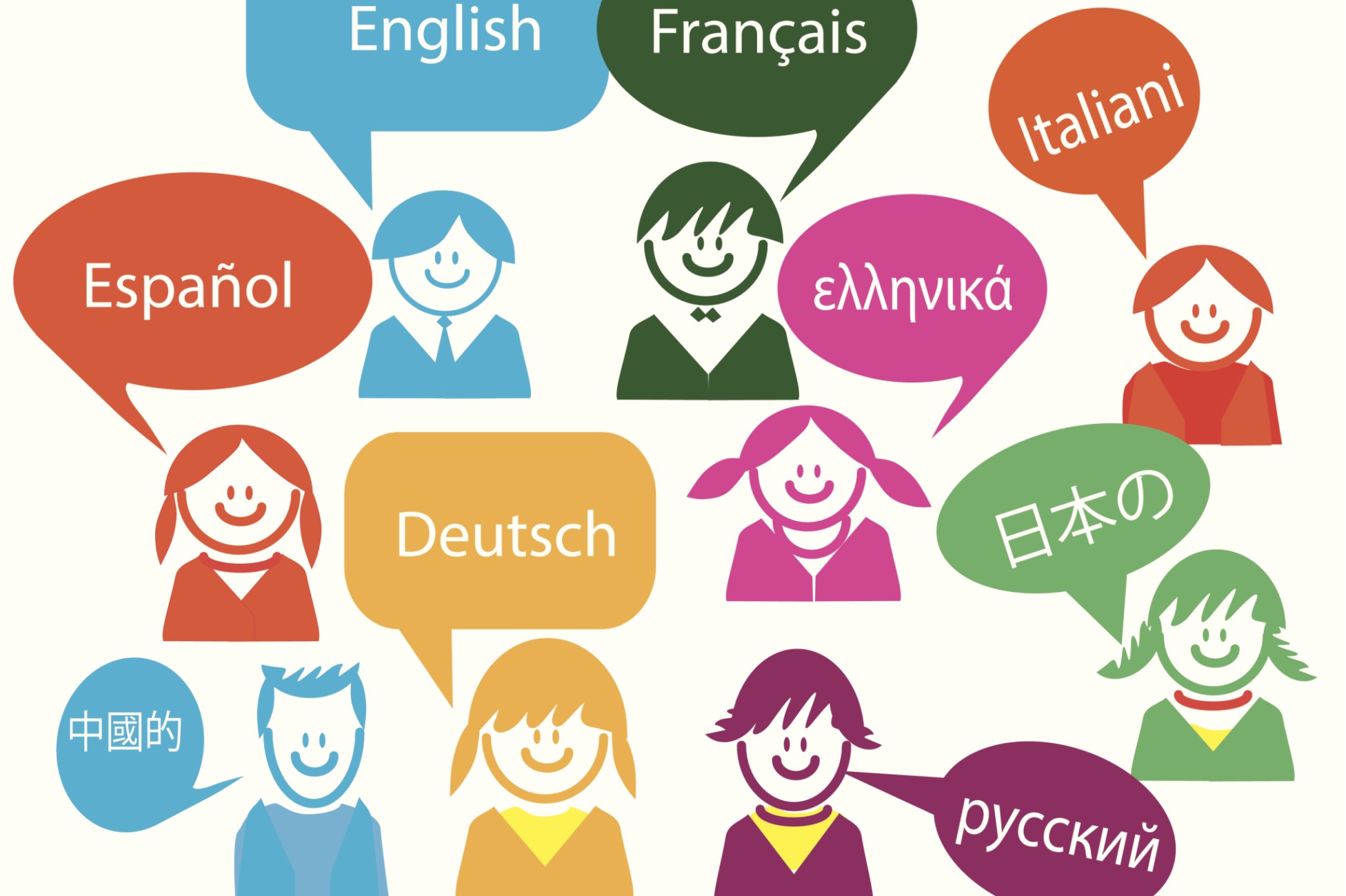
Firstly, the most obvious advantage of a bilingual school is that it greatly facilitates learning a second language. Indeed, young children acquire languages effortlessly due to their high brain plasticity. This is particularly true for spoken language: early exposure to the sounds of a language allows them to speak it without an accent. ("Learning Multiple Languages", Naître et Grandir)
But the linguistic advantage doesn't stop there: being immersed in a bilingual environment from school also allows children to better master their native language. For example, a child educated in a French-English bilingual school will have a better command of French than if they had been educated in a solely French-speaking school. ("Bilingualism, Multilingualism and Education", interview with Bruno Della Chiesa, linguist teaching at Harvard)
Finally, learning a second language in a bilingual school makes it easier for children to learn other foreign languages later on. This is due to a better understanding of the general mechanisms of language, resulting from the simultaneous learning of two languages at a young age. (The Child with Two Languages, Claude Hagège, Odile Jacob editions)
Being educated in a bilingual school offers advantages beyond learning English and other languages. All learning is enhanced by bilingual education, especially socio-emotional development.
“Numerous studies have revealed the cognitive advantages of bilinguals compared to monolinguals [in terms] of memorization and mental flexibility”
explains in this article Nawal Abboub, a doctor in neurosciences applied to education.
Children who have been educated in bilingual schools also increase their ability to solve logical problems and improve their capacity for abstraction, due to a greater number of connections in their brains between concepts, words, and symbols.
That's not all: recent research has also shown that bilingual children develop a greater capacity for empathy, meaning they can more easily put themselves in others' shoes (see "Multilingual children have more empathy", Slate, June 2, 2015).
In a world with increasing international exchanges, mastering several languages, especially English, has become a necessity! Allowing children to get used to hearing and speaking it from a young age gives them a significant advantage for easily integrating into today's society.
This also makes them aware of the existence of multiple countries and cultures, and sharpens their curiosity about the world around them, thus making them comfortable in a multicultural environment and more open to diversity.