.jpg)
In education, innovation is crucial for creating stimulating learning environments that meet students' needs. An often-overlooked, yet vital, element is school furniture. Imagining tomorrow's classroom furniture means rethinking its role, form, and functionalities to address the challenges and opportunities of future education.
Inclusion is a cornerstone of modern education, aiming to welcome and support all students, regardless of their abilities or specific needs. With this in mind, tomorrow's classroom furniture should be designed to be flexible and adaptable. Height-adjustable tables and chairs, ergonomic seating that offers personalized support, and modular workspaces can facilitate the participation of all students, no matter their learning style or physical requirements.
Collaborative learning and social interaction are increasingly valued in modern classrooms. Therefore, tomorrow's furniture should promote this interactivity by offering flexible configurations that allow students to work in groups, pairs, or as a whole class, depending on the activity. Easily movable tables and seats, integrated storage for supplies and technology, and magnetic or erasable surfaces can all encourage collaboration and creativity.
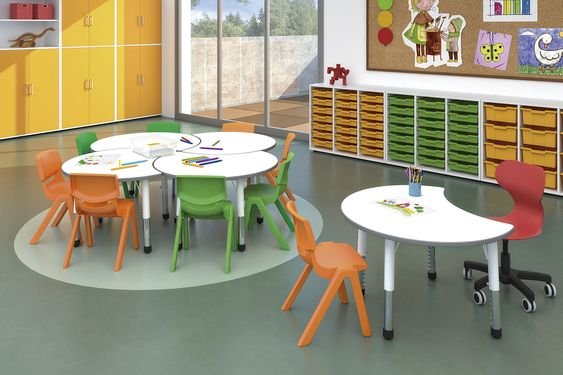
Student health and well-being are growing concerns in education. Therefore, tomorrow's classroom furniture should be designed to promote healthy and comfortable posture, reducing the risk of muscle pain or orthopedic problems. Ergonomic chairs with adjustable lumbar support, tiltable desks to reduce visual fatigue, and height-adjustable work surfaces can help maintain students' physical comfort throughout the school day.
Finally, tomorrow's classroom furniture should be designed to support a variety of teaching approaches and learning activities. Dynamic seating that allows students to move while staying focused, versatile workspaces that facilitate transitions between activities, and integrated technologies that encourage engagement and interaction can enrich students' learning experiences and promote their academic success.
In conclusion, tomorrow's classroom furniture must be considered an essential tool for creating inclusive, interactive learning environments that promote student well-being. By investing in innovative designs adapted to the evolving needs of education, we can transform classrooms into dynamic spaces where every student has the opportunity to thrive and succeed.